

What Base Does a Garden Room Need? A Midlothian & Edinburgh Guide
If you are planning a garden room, one of the most important early questions is what kind of base it needs.
The short answer is that a garden room usually needs a solid, level, properly prepared base suited to the structure, the ground conditions, and the manufacturer’s installation requirements. Common options include an insulated concrete pad, ground screws, and in some cases a paving slab base or similar system for lighter buildings.
For many homeowners in Midlothian and Edinburgh, an insulated concrete pad is often one of the strongest options for a fully insulated, year-round garden room because it provides a stable footprint and can support a better-performing floor build-up.
In this guide, we’ll look at the main base types, when each one makes sense, and what to think about before installation starts.
If you’re still deciding where the building should go, you may want to read our guide on planning a garden room in Midlothian and Edinburgh.
Why the Right Garden Room Base Matters
A garden room base does much more than simply support the building.
It helps ensure the structure stays level, stable and dry, and it plays a major role in how well doors, windows, flooring and insulation perform over time. Poor foundations can lead to issues such as movement, damp, sticking openings and an overall shorter service life.
This is especially important in Scotland, where wet ground, drainage issues and uneven gardens can all affect how successful a garden room project is in the long run.
Before choosing a foundation type, it helps to understand the full process of installing a garden room in Midlothian or Edinburgh.
Does Every Garden Room Need a Proper Base?
In most cases, yes.
Reputable guidance across the sector is very consistent on this point: a garden room should sit on a flat, solid and stable base, typically matching the footprint of the building and designed for the weight and type of structure being installed.
The exact base required depends on things like:
the size and weight of the garden room
whether it will be used all year
the condition of the ground
drainage and levels
access for machinery and materials
That means there is not one universal answer for every build, but there are a few base types that come up again and again.
The Best Base for Many Garden Rooms: Insulated Concrete Pad
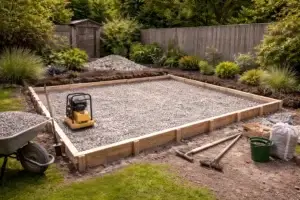
For a lot of fully insulated garden rooms, a concrete insulated pad is a very strong option.
An insulated concrete slab is popular because it creates a solid, durable, level base and can remove the need for a separate suspended timber floor frame in some designs. In slab-based systems, the final floor finish may be laid over the slab build-up itself, depending on the specification.
Technical guidance on ground floor construction also supports the use of insulation either above or below the slab, provided it is installed to the required specification and is suitable for the loading and moisture conditions.
Why an Insulated Concrete Pad Works Well
An insulated concrete pad is often chosen because it offers:
-
strong and stable support
-
a level base for installation
-
good long-term durability
-
compatibility with year-round insulated garden rooms
-
better potential thermal performance than a plain uninsulated slab when designed correctly
These are the same reasons many garden room suppliers and technical guides continue to treat concrete slab systems as a preferred foundation option for substantial garden buildings.
What Needs to Be Right
Even with a concrete base, the surrounding preparation still matters.
The area usually needs proper excavation, sub-base preparation, levelling, damp-proof detailing where required, and attention to drainage. Technical guidance also notes that insulation and membranes need to be installed correctly and in line with the intended floor design.
For HGS, this is where the groundwork side of the project becomes important. A good slab is not just about pouring concrete. It is about preparing the garden properly so the whole base system performs as it should.
Alternative Option 1: Ground Screws
Ground screws are one of the main alternatives to a concrete slab, and they have become increasingly popular for garden rooms.
Rather than excavating and pouring a full slab, ground screws are driven into the ground to create foundation points for the supporting frame. One of the biggest advantages is speed: industry guidance highlights that they can allow building work to start immediately after installation, without waiting for concrete to cure.
They are often a good option where:
-
access is awkward
-
the site is sloping or uneven
-
you want less excavation
-
you want to reduce mess and disruption
-
you need a faster install programme
Ground screw guides also highlight their usefulness for garden rooms, decking and other outdoor structures, particularly where traditional concrete work is less practical
When Ground Screws Make Sense
Ground screws can be especially useful in gardens where a poured slab would be harder to form due to levels, access or ground conditions. Some systems also allow for height adjustment through the supporting structure, which can help on uneven sites.
That said, the screw layout, depth and load requirements need to be matched to the garden room design and the soil conditions, so this is not a one-size-fits-all shortcut.
Alternative Option 2: Paving Slab Base
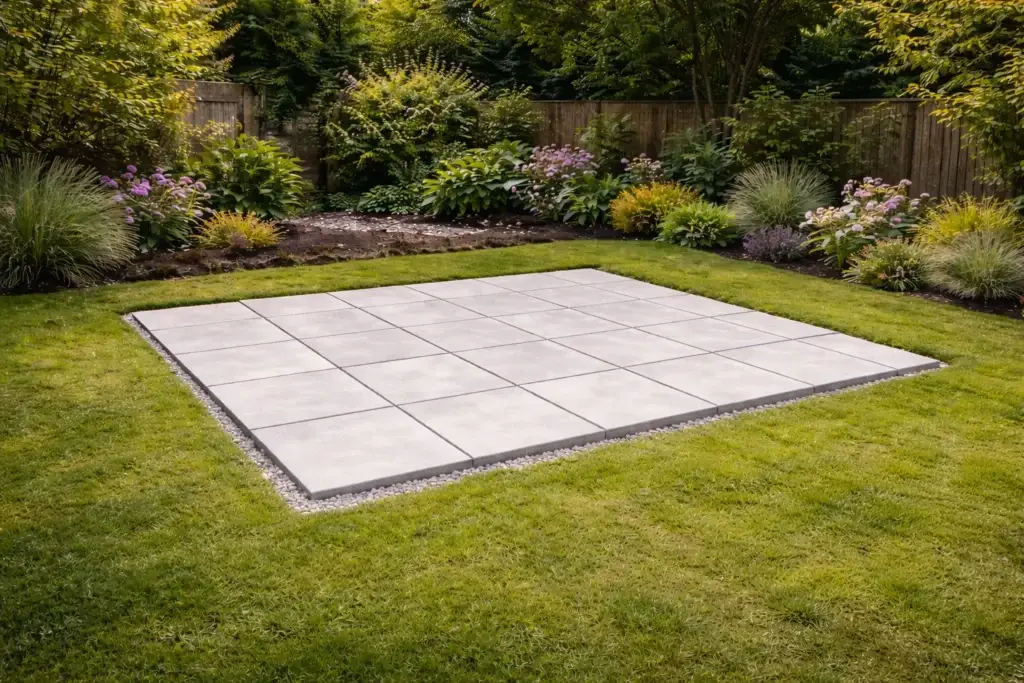
A paving slab base is another option you’ll see mentioned for garden buildings.
This usually involves laying slabs on a well-prepared and compacted sub-base to create a level area. Some guides list this as a common option for smaller or lighter garden buildings, and in some cases for garden rooms where the supplier allows it.
When a Slab Base Might Work
A slab base may suit:
-
smaller buildings
-
lighter structures
-
projects with a tighter budget
-
sites that are already relatively level and well-drained
However, compared with an insulated concrete pad, it is usually the less robust option for a fully insulated, all-year garden room. Whether it is acceptable really comes down to the building specification and ground preparation.
So if the goal is a substantial, long-term garden room rather than a lighter seasonal structure, many homeowners end up leaning toward either a properly designed concrete base or a ground screw system instead.
What About Drainage and Ground Conditions?
Whatever base type you choose, the success of the installation depends heavily on the condition of the site.
If the ground is uneven, soft or prone to holding water, those issues need to be addressed before the garden room goes in. That may include:
clearing the area
excavation
levelling
compacted sub-base work
improving drainage around the footprint
This is one reason a base should never be viewed in isolation. The best foundation in the world can still be let down by poor surrounding ground preparation.
Which Garden Room Base Is Best?
In practical terms, the best base depends on the build.
For many permanent, insulated garden rooms, an insulated concrete pad is one of the strongest all-round choices because it offers stability, durability and a good platform for a proper insulated floor system.
Ground screws are a very strong alternative where speed, reduced disruption, or awkward site conditions make them more suitable.
A paving slab base can work for some lighter buildings or where the manufacturer allows it, but it is usually more dependent on the specific structure and the quality of the prepared sub-base.
If you want the safest wording for customers, it is this:
the right base is the one that matches the garden room system, the ground conditions, and the intended year-round use of the space.
Garden Room Bases in Midlothian & Edinburgh
For homes in Midlothian and Edinburgh, there are a few local realities worth thinking about during planning.
Gardens here often involve:
-
sloping ground
-
tight side access
-
mixed soil conditions
-
existing patios or retaining edges
-
wet weather and drainage challenges
Because of that, the base decision is often tied closely to the surrounding landscaping and groundworks. In some gardens, a concrete insulated pad makes the most sense. In others, ground screws may reduce disruption and make access easier.
The important thing is to plan the whole site, not just the footprint of the room.
How Halley Garden Services Can Help
At Halley Garden Services, we help homeowners across Midlothian and Edinburgh prepare gardens properly for larger outdoor improvements.
If you are planning a garden room, we can help with the groundwork and surrounding preparation, including:
site clearance
excavation and levelling
sub-base preparation
drainage improvements
paths and access routes
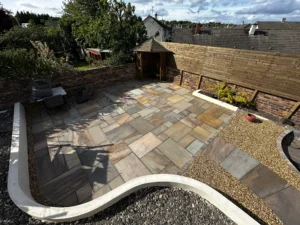
patios and steps
landscaping around the completed garden room
In some gardens, preparing the site may involve levelling the ground, improving drainage, or carrying out a full garden renovation before the structure is installed.
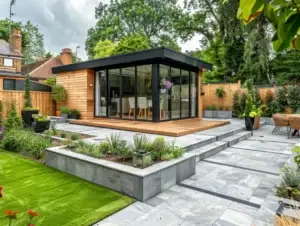
That kind of preparation helps ensure the room is not only installed on the right footing, but also looks like part of a well-finished garden rather than a standalone add-on.
Frequently Asked Questions
What is the best base for a garden room?
One of the most reliable options for a permanent garden room is an insulated concrete base. This provides a strong, level foundation that can support the structure properly and improve thermal performance when used with an insulated floor system. Other options include ground screw foundations or paving slab bases, depending on the design of the building and the ground conditions.
Do all garden rooms need a concrete base?
Not always. While many garden rooms are installed on concrete bases, some systems use ground screws or other foundation methods instead. The best base depends on the size of the structure, the soil conditions, and the installation requirements of the manufacturer.
How thick should a concrete base be for a garden room?
Concrete bases for garden rooms typically range from 100mm to 150mm thick, depending on the structure and ground preparation. The slab usually sits on a properly compacted sub-base to ensure stability and drainage.
How long does it take to install a garden room base?
A concrete base may take one to two days to prepare and pour, but it normally needs several days to cure before the garden room is installed. Ground screw systems can often be installed much faster, sometimes allowing the structure to be built immediately.
At Halley Garden Services, we specialise in the groundworks and landscaping Services required to support garden offices and garden rooms.
If you’re planning a garden office and need help preparing your garden properly, we can take care of everything from bases and drainage to finishing touches that complete the space.
👉 Get in touch today for a no-obligation quote and expert advice across Midlothian and Edinburgh.